Weekly Important News (22 - 28 Dec)

Fresh SSB batches start around the 1st & 15th of every month.


  • President grants assent to rural jobs Bill; govt. lists four focus areas for works
    President Droupadi Murmu approved the Viksit Bharat–Grameen Ajeevika Mission, replacing MGNREGA. The government said the scheme will prioritise water security, rural infrastructure, livelihoods, and disaster mitigation. Guaranteed workdays increase to 125, with a ₹1.51 lakh crore budget. Critics warn of dilution of the legal right to work.
  • Cong. takes to the streets over move
    The Congress launched nationwide protests against the replacement of MGNREGA, alleging the government weakened a demand-driven, rights-based scheme. Protests were held at district headquarters, with the party accusing the Centre of bypassing Parliament and undermining rural employment security.
  • Railways to hike fare from December 26; Cong. criticises move
    Indian Railways announced fare hikes for ordinary class journeys beyond 215 km and AC classes, aiming to raise about ₹600 crore annually. Non-AC monthly season tickets remain unchanged. The Congress criticised the move as anti-poor, while Railways said it was modest and rational.
  • The bulldozed demolition of MGNREGA
    Sonia Gandhi argues that MGNREGA’s replacement dismantles the constitutional right to work. She highlights reduced demand-based employment, capped budgets, higher State cost burdens, delayed wages, and weakened gram sabha roles, warning of severe consequences for rural livelihoods and social security.
  • Unlocking the potential of India–Africa economic ties
    The article outlines a five-point strategy to double India–Africa trade by 2030. It stresses reducing trade barriers, moving to value-added manufacturing, supporting MSMEs via credit lines, improving logistics, and expanding services trade. India-Africa trade stood near $100 billion in FY24.
  • Beyond the optics
    The piece analyses PM Modi’s recent West Asia engagements, noting progress in trade and connectivity but limited diplomatic breakthroughs. It stresses that India’s credibility as a Global South leader depends on sustained engagement, conflict resolution efforts, and translating symbolism into long-term economic and strategic gains.
  • Lessons from China on tackling pollution
    China cut PM2.5 levels by over 50% between 2013 and 2021 through strong regulation, regional coordination, and enforcement. The article suggests India adopt long-term planning, empowered institutions, clean energy transitions, and stricter compliance, rather than fragmented and reactive pollution control measures.
  • India, New Zealand wind up FTA talks, set to boost trade
    India and New Zealand concluded FTA talks, targeting to double bilateral trade to $5 billion in five years. The deal offers tariff-free access for most goods, safeguards sensitive farm sectors, includes a $20 billion investment commitment over 15 years, and provides 5,000 annual work visas.
  • Putin’s visit to India and the aftermath
    The article assesses President Vladimir Putin’s December visit, reaffirming India–Russia strategic ties amid Western pressure. Defence cooperation remains central, including S-400 systems and BrahMos. While India diversifies partners, Russia remains a key supplier, though balancing relations with the West is increasingly complex.
  • NITI Aayog proposes $10-bn research fund, scholarships to ‘globalise’ higher education
    NITI Aayog recommended a $10 billion research fund, global scholarships, easier foreign faculty recruitment, and regulatory reforms to internationalise Indian higher education. It noted a stark imbalance, with 28 Indians studying abroad for every international student in India, urging India to become a global education hub.
  • Anjadip, indigenous anti-submarine shallow water craft, joins the Navy
    The Indian Navy inducted Anjadip, the third indigenously built ASW shallow water craft. Built under a public-private partnership, it enhances coastal surveillance, anti-submarine warfare, and mine-laying. Over 80% indigenous content reflects progress under Aatmanirbhar Bharat in defence manufacturing.
  • Bangladesh missions in India witness protests
    VHP and Bajrang Dal activists protested outside Bangladesh missions in Delhi and other cities over the killing of a Hindu leader in Bangladesh. Dhaka summoned India’s envoy seeking investigation, while India condemned violence near diplomatic missions and deployed additional security to prevent escalation.
  • India’s first anti-terror policy to be out soon
    The Centre is finalising India’s first comprehensive anti-terror policy to guide States on prevention, response, and coordination. It focuses on pre-empting attacks, tackling digital radicalisation, misuse of borders, foreign funding, and better intelligence sharing, with NIA playing a central role.
  • India pledges $450 million to aid Sri Lanka’s recovery
    India announced a $450-million reconstruction package to help Sri Lanka recover from Cyclone Ditha, which killed at least 643 people and displaced many. The package includes $350 million in concessional Lines of Credit and $100 million in grants. India had earlier deployed military and relief teams, marking strong humanitarian support and a “new chapter” in bilateral ties.
  • The VB-G RAM G Act 2025 fixes structural gaps
    The government defends the Viksit Bharat–Grameen Ajeevika Mission (Gramin) Act, 2025, arguing it strengthens rural employment by raising guaranteed workdays to 125 and improving funding equity. Allocations rose from ₹33,000 crore in 2013–14 to ₹86,000 crore in 2024–25. The article counters criticism by stating decentralisation, demand-based work, and States’ roles remain intact.
  • Maternal mortality dropped as institutional deliveries rose to 89%: Health Minister
    Health Minister J.P. Nadda said institutional deliveries increased to 89%, leading to a sharp fall in maternal mortality. He highlighted Ayushman Arogya Mandirs, expanded immunisation, and medical college growth. India now has 706 medical colleges, up from 387 in 2014, improving maternal and child healthcare access, especially in rural and tribal areas.
  • Critical minerals important for national security and technological sovereignty
    Air Marshal Ashutosh Dixit stressed that access to critical minerals is vital for defence systems, clean energy, and technological sovereignty. He highlighted India’s vulnerability to supply-chain disruptions and export controls. Initiatives like the National Critical Mineral Mission aim to secure resources across mining, processing, manufacturing, and recycling to strengthen strategic autonomy.
  • Centre tells States to ‘enforce’ apex court orders on Aravalis
    The Environment Ministry directed Haryana, Rajasthan, and Gujarat to enforce Supreme Court orders restricting new mining in the Aravalli range until management plans are finalised. Existing mines may continue only if norms are strictly followed. The Centre also asked ICFRE to identify permissible areas, amid long-standing concerns over ecological damage and deforestation.
  • ISRO sends largest commercial communications satellite to orbit
    ISRO successfully launched the 6,100-kg BlueBird Block-2 satellite into low Earth orbit using LVM3, marking its largest commercial launch. Developed by U.S.-based AST SpaceMobile, the satellite aims to provide space-based broadband directly to smartphones. The mission showcased LVM3’s precision and boosted India’s credibility in the global commercial launch market.
  • Union Cabinet clears 3 new metro stretches; network to cross 400 km
    The Cabinet approved three new Delhi Metro corridors spanning 16 km at a cost exceeding ₹12,000 crore under Phase-V(A). With 13 new stations, the network will exceed 400 km and is expected to cut congestion and reduce carbon emissions by nearly 33,000 tonnes annually, improving connectivity across Delhi-NCR.
  • New labour codes, the threats to informal workers
    The article warns that new labour codes weaken protections for informal workers, who form nearly 90% of India’s workforce. It highlights diluted occupational safety norms, dismantling of welfare boards, vague social security provisions, and risks to workers’ health and benefits. States like Tamil Nadu are urged to safeguard existing welfare structures.
  • Magnetic moment: India must not undermine green compliance in clean energy transition
    The commentary cautions that India’s clean-energy push, especially for EVs and wind power, depends heavily on rare earths and critical minerals. It argues that weakening environmental safeguards to boost mining could hurt credibility and sustainability. Instead, India should invest in domestic capacity, recycling, transparent regulation, and global supply-chain resilience.
  • Why manufacturing has lagged in India
    The article explains India’s manufacturing underperformance compared to China and South Korea, citing high public-sector wages, limited technological upgrading, and reliance on cheap labour. Manufacturing’s GDP share has stagnated while services grew. Without sustained investment in technology and productivity, wage growth remains uneven and inequality continues to rise.
    • China using LAC disengagement to reset India ties, curb U.S. alignment
      A U.S. Defence Department report says China is leveraging disengagement at remaining LAC friction points to stabilise ties with India and prevent deeper India–U.S. strategic alignment. Beijing views reduced border tensions as a way to manage regional competition. India, however, remains cautious due to unresolved disputes and persistent trust deficits.
    • Indian Army relaxes social media policy, allows ‘passive participation’
      The Indian Army has revised its social media rules to permit personnel to passively view content on platforms like Instagram, X and YouTube. Active engagement—posting, commenting, sharing or messaging—remains strictly prohibited. Limited use of messaging apps is allowed only for unclassified communication, with safeguards to protect operational security.
    • Circulatory system ailments caused most deaths in 2023: report
      Diseases of the circulatory system accounted for 36.4% of all medically certified deaths in India in 2023, according to the Registrar-General of India. Mortality was highest among those above 70 years, though rising heart disease among younger age groups is a concern. Only 22% of total registered deaths were medically certified.
    • India will soon become self-reliant in semiconductors
      Union Home Minister Amit Shah said India will soon achieve self-reliance in semiconductors and begin exports, despite entering the sector late. He highlighted industrial projects worth over ₹2 lakh crore and credited initiatives like Vibrant Gujarat and regional investment summits for building a strong manufacturing ecosystem.
    • Social scourge: Child marriages lead to poor outcomes in health, education, poverty alleviation
      Child marriage continues to undermine health, education and poverty reduction, threatening India’s SDG targets. Data show higher maternal mortality, poor child health, and lower educational attainment among affected girls. Despite legal provisions, uneven enforcement persists, necessitating stronger social interventions, education incentives, and grassroots awareness to bridge policy–practice gaps.
    • Rajasthan expedites installation of rooftop solar power plants
      Rajasthan is accelerating rooftop solar installations under the Revamped Distribution Sector Scheme and PM Surya Ghar Muft Bijli Yojana to reduce power losses and improve discom finances. Over 2.36 lakh applications have been received and 1.15 lakh systems installed. Smart metering and infrastructure upgrades are being prioritised.
    • How India has managed to weave ‘RCEP minus China’
      By concluding FTAs with RCEP members like Australia, ASEAN and now New Zealand—while excluding China—India has secured market access without surrendering tariff autonomy. Experts say this “RCEP minus China” strategy reduces vulnerability to Chinese imports while preserving trade integration through bilateral and regional agreements.
    • Energy storage, green hydrogen to reshape RE sector
      Energy storage and green hydrogen will transform India’s renewable energy ecosystem by addressing intermittency and enabling round-the-clock clean power. With a 500 GW non-fossil capacity target by 2030, investments of about ₹30 lakh crore are expected, supported by green bonds, blended finance and National Green Hydrogen Mission incentives.
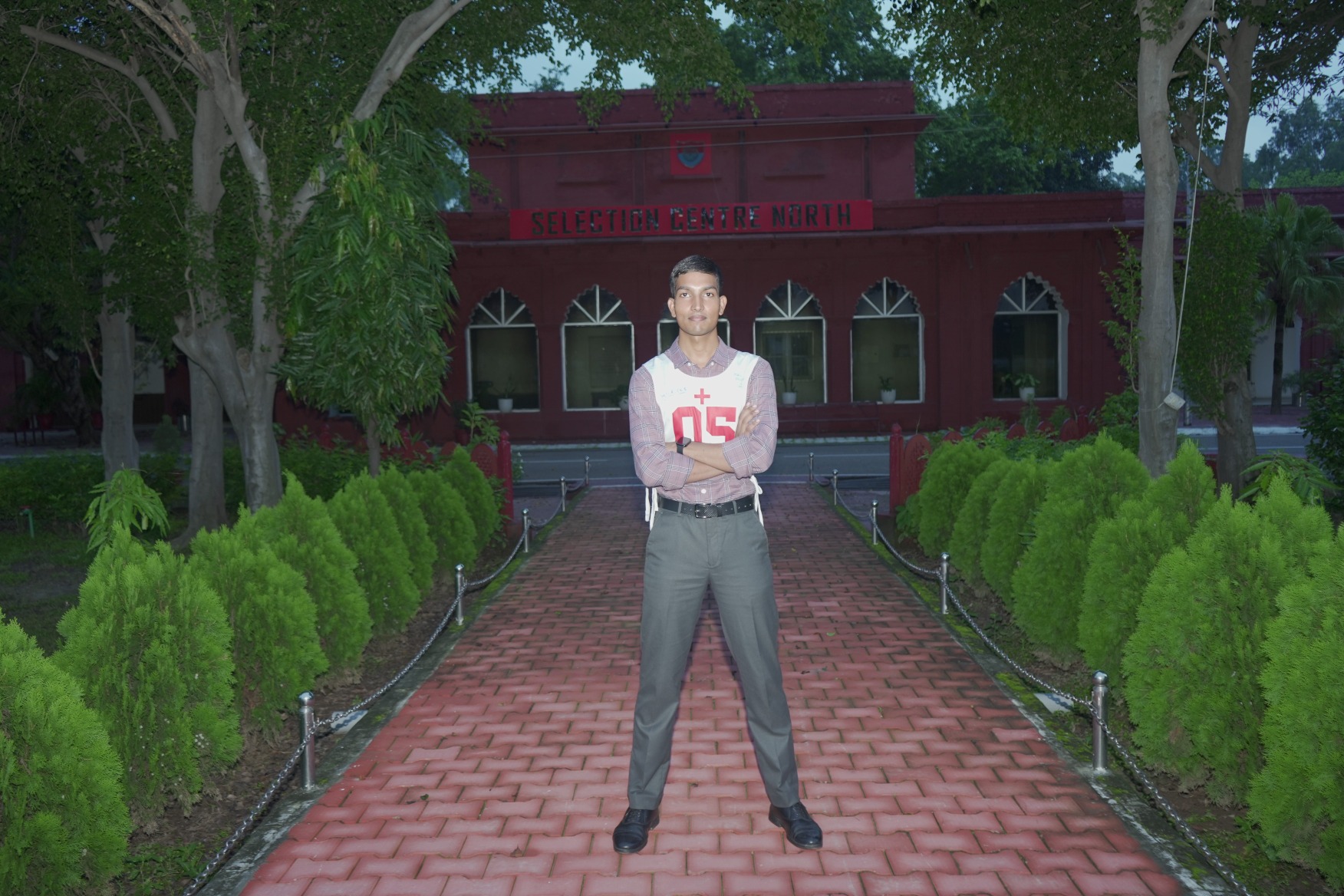

    Sachin Jangir
    Recommended for IMA 160 (AIR 140) & NDA 152 (AIR 128).

    OUR COURSES View More