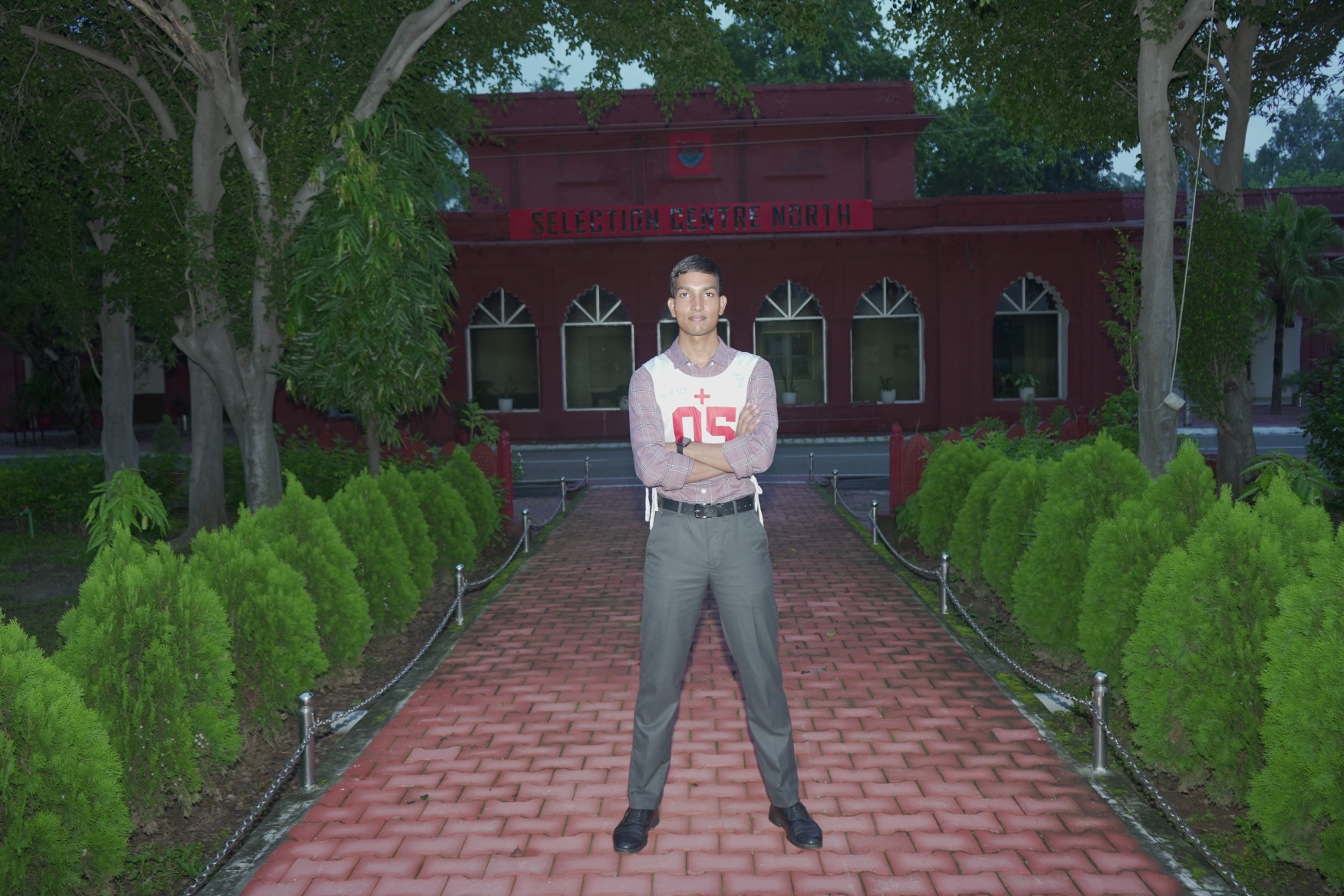
Fresh SSB batches start around the 1st & 15th of every month.
• Air Force chief calls for timely delivery of combat aircraft
Air Chief Marshal A.P. Singh stressed adhering to delivery schedules to maintain operational readiness amid evolving threats. Speaking at “Aeronautics 2047” in Bengaluru, he commended the Aeronautical Development Agency for 25 years of Tejas flight operations, over 5,600 flight trials, and support from more than 100 design centres and industries. He highlighted Tejas as a successful indigenous platform that must meet timelines to keep the IAF combat-ready.
•
Venezuela V-P to take over as Maduro held in U.S. jail Venezuelan President Nicolás Maduro was taken to a New York prison on criminal charges after a U.S. military operation, prompting Venezuela’s top court to appoint Vice-President Delcy Rodríguez as Acting President. Maduro and his wife face U.S. narcoterrorism charges. Rodríguez demanded U.S. release Maduro and accused Washington of violating sovereignty. Former U.S. President Trump warned Rodríguez would “pay a bigger price” if she failed to act “right.” The crisis has triggered diplomatic concern globally.
•
Bangladesh says it will not travel to India for T20 World Cup over ‘security concerns’ With weeks left for the Men’s T20 World Cup co-hosted by India and Sri Lanka, the Bangladesh Cricket Board announced that the national team “will not travel to India” citing security worries amid escalating political tensions. The BCB asked ICC to relocate Bangladesh’s matches outside India. The decision followed BCCI’s directive to Kolkata Knight Riders to part ways with Mustafizur Rahman. ICC will respond soon to BCB’s request.
•
India’s Russian oil imports at six-month high in November India imported 7.7 million tonnes of Russian oil in November 2025, the highest in six months, accounting for 35% of total oil imports. In value terms, imports hit $3.7 billion or 34% of India’s oil bill. The rise comes despite slow progress on a U.S. trade deal. India also increased U.S. oil imports to nearly 13% that month. Together, Russia and the U.S. provided almost half of India’s oil imports in November 2025.
•
Tragedy and farce The editorial argues that U.S. action in Venezuela reflects a renewed imperial strategy under Donald Trump, mirroring Iraq 2003 and Libya 2011. It criticises the seizure of Maduro as violating Article 2 of the UN Charter and driven by oil and geopolitical rivalry with China. It states Washington’s claim of “liberation” masks old interventionist ambitions and that U.S. policy undermines sovereignty norms while pursuing control over Venezuelan oil reserves.
•
Security camps, the game changer in the Maoist fight The article notes Maoism in India has sharply declined, with LWE-affected districts falling from 126 (2018) to 11 (2025). Security camps in remote Maoist areas boosted police presence, reduced reaction times, increased intelligence, and improved civil administration access. Surrender rates have risen as Maoist support wanes. The author stresses long-term peace requires implementing constitutional rights (e.g., PESA, FRA) and building governance structures in regions long neglected.
•
High and dry The editorial says social security for gig workers must be made accessible in practice. Following nationwide gig worker strikes, the Centre issued draft rules enabling platform workers to be covered under labour codes but many gaps remain, especially regarding opaque pay systems and lack of benefits. The draft rules require aggregators to register workers and upload data, but thresholds such as 90–120 working days may exclude many. It calls for clearer benefits, dispute mechanisms, and portability.
•
India loses 0.4% of its GDP every year to natural disasters Data from OECD studies show emerging Asian economies face escalating climate-linked disasters. India’s average disaster-related losses equal 0.4% of GDP annually. Floods and storms dominate in India, while China and Indonesia face higher seismic risk. Disaster occurrences have risen since 1950, with major economic losses recorded between 2010-2024. The article highlights the need for disaster risk finance, early warning systems, and vulnerability assessments as climate shocks intensify.
•
Venezuela crisis unlikely to hit India’s energy security Latest trade data show Venezuelan crude formed only 0.3% of India’s total oil imports up to November 2025 due to U.S. sanctions since 2019. Imports fell from over $13 billion (2013) to $255.3 million (2025-26). Experts say current tensions won’t materially impact India due to low import volumes and diversified sourcing. Venezuela accounts for about 3.5% of OPEC exports and roughly 1% of global oil supply.
•
India ‘concerned’ for well-being of people of Venezuela: MEA After the U.S. military removed Maduro from Caracas, India urged dialogue and peaceful resolution, expressing concern for Venezuelan citizens’ welfare. The MEA advised Indian nationals to remain cautious and stay in contact with the embassy. India highlighted its long-standing support for peaceful multilateralism and stability in the region, while monitoring the safety of its citizens amid fast-evolving developments.
•
Trump asserts India cut Russian oil to please him Former U.S. President Donald Trump claimed India reduced Russian oil imports to “make him happy,” linking it to his push for a trade deal and threats of 25% tariffs on Indian goods. Senator Lindsey Graham backed the claim, stating Indian diplomats sought mediation. Indian officials have not publicly commented. The Congress criticised the Indian government for not responding strongly to Trump’s remarks.
•
The parallel track that keeps U.S.-India ties going The article says despite delays in the Quad Summit and rising political frictions over oil and tariffs, U.S.-India institutional cooperation in defence, technology, and infrastructure has deepened. Framework agreements, defence logistics pacts, maritime exercises, semiconductor cooperation, and supply chain initiatives illustrate strategic continuity. Analysts argue that while political tensions may pause diplomacy, bureaucratic and technical cooperation keeps the partnership resilient.
•
Police in States step up social media monitoring Dedicated police cells monitoring platforms rose from 262 (2020) to 365 (2024) across 28 States and 8 UTs. Bihar (52), Maharashtra (50), Punjab (48), West Bengal (38) and Assam (37) have the most cells. Officials cite ethnic violence, misinformation, cybersecurity concerns, and shutdown experiences as drivers. The number of cybercrime police stations also increased from 1,010 (2020) to 1,147 (2023). The police now analyse trends across apps such as WhatsApp, Instagram, and Facebook.
• Indian Embassy hired Trump aide’s firm for talks on trade, bilateral ties during Operation Sindoor
On May 10, 2025 — the day an India-Pakistan ceasefire under Operation Sindoor was announced — the Indian Embassy in Washington sought four outreach meetings with senior U.S. officials via SHW LLC, a lobbying firm led by former Trump spokesperson Jason Miller. FARA filings show 60 embassy-related entries since April 2025, half tied to India-U.S. trade talks. The Embassy said hiring lobbyists is “standard practice”. The move is notable given Trump-era transactional diplomacy.
•
ISRO calls for proposals from Indian scientists to analyse data from Aditya-L1 Marking two years since Aditya-L1 reached the Sun–Earth L1 point (January 6, 2024), ISRO invited scientific proposals for the first AO cycle of solar observations. Aditya-L1 has generated 23 TB of public data enabling continuous solar monitoring without eclipses. Indian researchers from institutes and universities may apply as Principal Investigators with strong solar science backgrounds. The initiative aims to maximise scientific return from India's maiden solar mission.
•
Dangerous paradigm The editorial argues that President Trump’s unilateral seizure of Maduro represents a lowering of norms for international conduct, bypassing Congress and the UN. It warns the action emboldens neo-imperialist behaviour, threatens military escalations against states like Colombia and Mexico, and revives outdated doctrines. The piece highlights concerns that such precedents may normalise force-based “regime change” and destabilise global order, drawing criticism from Europe, Russia, and Latin America.
•
America’s Venezuelan actions are most unlawful The article critiques the U.S. capture of Maduro as violating Article 2(4) of the UN Charter, which prohibits force except in self-defence or with UNSC approval. Neither applies. Forcibly transferring a head of state for trial abroad breaches immunity ratione personae. The author argues U.S. claims of combating narco-terrorism do not justify overriding sovereignty. The precedent undermines international law and reinforces perceptions that powerful states operate outside legal constraints.
•
Data shows Venezuela’s pivot from the U.S. to China Using SIPRI and AidData, the article shows Venezuela reduced dependence on the U.S. since the mid-2000s, shifting weapons imports, minerals trade, and finance to China. China now accounts for ~40% of Venezuelan arms imports (since 2014) and has surpassed the U.S. in financing, loans, and grants to Latin America. Reuters data shows mineral exports to China surged to 28% by 2018. Analysts suggest China’s deepening influence may have shaped U.S. intervention calculus.
•
Rethinking India’s skilling outcomes Despite PMKVY training 1.4 crore candidates (2015–2025), vocational skilling remains a secondary pathway due to weak employability outcomes, modest wage gains, and little industry ownership. Only 4.1% of India’s workforce has formal vocational training. Sector Skill Councils lack credibility as employers value degrees over certifications. Limited NAPS uptake and fragmented governance hinder results. The article argues skilling must integrate with formal education and industry co-ownership to generate sustained economic mobility.
•
Chief of Army Staff highlights modern warfare in UAE talk During a visit to the UAE National Defence College, General Upendra Dwivedi highlighted evolving global threats, the role of advanced technology, and need for multilateral defence cooperation. He met senior UAE military officials and discussed training, joint exercises, and defence industry ties. The visit focused on strengthening India-UAE strategic partnership. He will follow up with an official visit to Sri Lanka to engage military, government, and pay homage to fallen Indian soldiers.
•
Venezuelan Parliament swears in Rodriguez as interim President Venezuela’s Parliament swore in Delcy Rodríguez as interim President two days after U.S. forces seized Maduro. Rodríguez pledged to cooperate with Washington on securing Venezuelans’ welfare while condemning the “kidnapping” of Maduro. Her brother Jorge Rodríguez was re-elected Speaker. Opposition figure Maria Corina Machado dismissed Rodríguez as illegitimate, vowing to contest future elections. Crowds outside the Assembly demanded Maduro’s release amid rising political uncertainty.
•
‘U.S. takeover of Greenland would mark end of NATO’ Danish PM Mette Frederiksen warned that U.S. attempts to take control of Greenland — a strategic Arctic territory — would effectively dissolve NATO. Her comments responded to President Trump’s repeated statements about placing Greenland under U.S. jurisdiction, potentially by force. European leaders expressed alarm as the U.S. military operation in Venezuela heightened concerns of further interventions. Denmark reiterated that Greenland’s security is inseparable from NATO guarantees.
•
Govt. pegs FY26 growth at 7.4% amid tariff concerns The First Advance Estimates project India’s FY26 real GDP growth at 7.4%, up from 6.5% in FY25. Q1 and Q2 growth are expected at 7.8% and 8.2%, slowing to 6.8% in H2. The estimate comes despite 50% U.S. tariff hikes on Indian labour-intensive exports such as apparel and engineering goods. RBI had earlier forecast 7%. Nominal GDP growth is estimated at 8%. Private consumption is slowing but remains above FY25 levels.
• ISRO set to launch earth observation satellite on Jan. 12
ISRO will launch PSLV-C62/EOS-N1 from Sriharikota on January 12, 2026. EOS-N1 is an earth imaging satellite intended for strategic use. This will be the 105th PSLV launch and comes after PSLV faced a glitch on May 18, 2025. The mission includes other payloads and is aimed at supporting startups and academia. BlueBird Block-2 was earlier placed in orbit in December 2025.
•
Fine-tune this signal to sharpen India’s AMR battle The article argues that PM Modi’s remarks on antimicrobial resistance (AMR) during “Mann Ki Baat” could mainstream AMR awareness, historically confined to medical experts. Overuse of antibiotics drives AMR in India. Experts urge expanding surveillance beyond tertiary hospitals to include private hospitals and non-urban centres. India’s AMR surveillance network (NARS-Net) covers 60 labs but lacks comprehensive national data. A One Health approach linking human, animal, and environmental health is critical.
•
How every ₹100 is spent by Indian households New Household Consumption Expenditure Survey (2022-23 to 2023-24) shows shifts from food and fuel toward services and aspirational spending. Monthly per capita food spending declined as health, education, clothing, housing and services increased. Urban households spend more on rent, clothing, transport, and personal items, while rural households show rising spending on tobacco, fuel, and footwear. LPG subsidies and schemes reduced rural fuel costs. Data suggest rising living standards and structural consumption change.
•
Trump clears Bill to slap up to 500% tariff on buying Russian oil The U.S. Senate passed a bipartisan bill empowering President Trump to impose tariffs up to 500% on Russian oil and uranium, pressuring India and others to stop Russian imports. The bill had 84 Senate and 151 House co-sponsors. Senator Lindsey Graham said stopping India, China, Brazil from buying discounted Russian crude is a “priority”. Trump previously levied 25% tariff on Indian goods and is pushing tighter sanctions linked to Ukraine.
•
UN body pegs India’s growth at 7.2% this fiscal UN DESA forecast India’s FY26 growth at 7.2%, slightly below India’s 7.4% estimate. It said consumption and public investment will offset U.S. tariff impacts, though 18% of Indian exports go to the U.S. Tariffs could affect labour-intensive exports, but electronics and smartphone exports may remain exempt. DESA projects 7.4% growth in calendar year 2025 and 6.6% and 6.8% growth in 2026-27 and 2027-28, supported by services and manufacturing.
•
Govt. seeks feedback on draft Bill to regulate pesticides, promote ‘safe and effective’ use The Agriculture Ministry released the draft Pesticides Management Bill to replace the Insecticides Act, 1968. It will regulate manufacture, import, labelling, sale, storage, and disposal of pesticides. It defines pesticides broadly to include biological and botanical agents. A Central Pesticides Board will advise on approvals. Penalties may go up to ₹50 lakh and imprisonment for violators. The Bill aims to protect human, animal, and ecological health, and ensure quality standards.
•
India-Europe ties growing, can bring stability to global politics: Jaishankar During visits to Paris and Luxembourg, EAM S. Jaishankar said India-Europe cooperation can stabilise global politics amid the Venezuela crisis and Russia-Ukraine war. India and EU are working on an FTA, digital partnerships, and defence technology. Europe has become India’s biggest export destination. The India-Weimar Triangle (India-France-Germany) met for the first time, with discussions on Indo-Pacific, multilateral reform, and supply chains. EU sees India as a strategic balancer.
•
U.S. govt. unveils plans to control Venezuela’s oil sales ‘indefinitely’ Following Maduro’s capture, the U.S. Energy Department began marketing Venezuelan crude globally and aims to “turn over” up to 50 million barrels for American sale. Trump said proceeds would force Venezuela to buy U.S.-made products. U.S. authorities are negotiating with private firms to refine and distribute Venezuelan oil. Critics warn the plan violates sovereignty and amounts to long-term control of foreign energy resources under anti-narcotics pretexts.
•
Shah launches database on bomb blasts in India Home Minister Amit Shah inaugurated the National IED Data Management System (NIDMS) for cataloguing all bomb blasts since 1999. Hosted at the NSG campus in Manesar, it integrates State police, Central agencies, and forensic labs. NIDMS will help analyse blast patterns, strengthen intelligence, standardise IED-related data, and support counter-terror strategies. A unified digital window will assist investigations and trend analysis, including device types, triggers, locations, and materials used.
•
India dismisses Lutnick’s claim that PM didn’t call Trump to seal trade deal MEA rejected U.S. Commerce Secretary Howard Lutnick’s remarks that a bilateral trade deal failed because PM Modi did not call President Trump. MEA said talks continued through 2025 and both leaders spoke multiple times after February 13, 2025. India reiterated commitment to a “balanced” India-U.S. trade pact serving mutual interests. MEA clarified characterisation of discussions was “not accurate” and negotiations are ongoing.
• De-dollarisation fear
The editorial argues that Trump’s push for 500% tariffs on Russian oil and his seizure of Venezuelan assets signal U.S. anxiety over declining dollar primacy in global trade. Russia, China, and India have increased non-dollar oil settlement mechanisms since 2014 and especially post-Ukraine 2022. China’s yuan share in energy trade has risen, and BRICS promotes alternative payment systems. The piece sees U.S. actions as attempts to curb China’s ascent in the global economic ecosystem.
•
DRDO conducts key test for hypersonic missile programme DRDL Hyderabad completed a major milestone in India’s hypersonic programme with a long-duration ground test of an actively-cooled scramjet combustor at its Scramjet Connect Pipe Test Facility. The combustor sustained performance for over 12 minutes, which is globally significant. The Ministry of Defence said the test strengthens India’s position in advanced hypersonic and aerospace technologies.
•
Taliban diplomat to take charge of Afghan embassy Mufti Noor Ahmad Noor, a senior Taliban Foreign Ministry official, arrived in Delhi to assume Charge d’Affaires at the Afghan Embassy nearly five years after Kabul fell. India has not formally recognised the Taliban but maintains functional ties via a technical mission in Kabul. Previous attempts to appoint envoys via Bangladesh and Russia failed. India is allowing the old Afghanistan flag and staff to remain for now while continuing humanitarian engagement.
•
Defying U.S. warning, Iran clamps down on protests Nationwide protests in Iran neared two weeks despite Internet and phone blackouts. U.S.-based Human Rights groups report at least 65 killed and over 2,300 detained. State media accused protesters of treason after U.S. expressions of support. Supreme Leader Khamenei signalled a crackdown, warning of foreign interference. Schools and universities faced closures. U.S. Secretary of State Marco Rubio warned Tehran not to “play games” with President Trump’s threats.
•
How will the U.S. exit affect climate action? President Trump ordered U.S. withdrawal from 66 international bodies including the UNFCCC and IPCC, calling climate change a “hoax”. Exiting the UNFCCC removes the U.S. from the core reporting and accountability framework for emissions and climate finance, reducing leverage at COP negotiations. It may slow global climate finance reforms, reduce adherence to mitigation commitments, and weaken scientific collaboration. The IPCC may lose U.S. participation but continue using global research inputs.
•
Goyal ends Brussels trip, confident of ‘early conclusion’ of FTA talks Commerce Minister Piyush Goyal concluded two days of India-EU FTA negotiations in Brussels, calling the round a “decisive step” toward conclusion. He held technical and ministerial meetings with EU Trade Commissioner Maroš Šefčovič. Talks focused on goods, services, and rules of origin. The Commerce Ministry said both sides clarified key approaches and remain committed to a balanced and mutually beneficial agreement.
•
‘Shifting from Russian oil imports will currently not hurt India financially’ Analyses show the price premium on U.S. crude versus Russia is similar to three years ago, while Russia’s discount shrank significantly. In November 2025 India paid $498.8/tonne for Russian oil, versus $523.3/tonne for U.S. oil — a $24.5 differential. Experts say India could shift from Russian crude with limited financial impact due to low global prices and diversified sourcing. Risks remain from future sanctions and grade compatibility of crude types.
•
Govt. launches drive to reduce road accident deaths The Road Transport Ministry and Save Life Foundation identified 100 districts with highest crash fatalities to implement a “zero-fatalities programme” aligned with India’s goal to halve road deaths by 2030. These districts recorded nearly 89,000 deaths in 2023–24. Mapping found 17,331 critical crash sites accounting for 58% of deaths. Interventions include engineering fixes, low-cost safety improvements, trauma response upgrades, and district-level coordination. Nitin Gadkari will convene district officials in Delhi.
•
Aditya-L1 decoded how solar storms impact earth’s magnetic field: ISRO ISRO said data from Aditya-L1 and other missions showed a 2024 solar storm compressed Earth’s magnetosphere, exposing some geostationary satellites to harsh space conditions. Scientists found the strongest effects occur during the turbulent initial phase of solar storms. The study, published in The Astrophysical Journal, highlights risk to satellites, communications, power infrastructure, and aviation. The event demonstrated the value of India’s first solar observatory for space weather forecasting and modelling.